Remote Monitoring
Remote Patient Monitoring and the Quiet Revolution in Chronic Disease
It does not make headlines. But for millions living with chronic disease, remote monitoring is quietly rewriting what healthcare feels like.
Some revolutions arrive with noise. Others slip into daily life so quietly that you only notice them in hindsight. Remote patient monitoring is the second kind. For millions of people living with diabetes, high blood pressure, heart disease, and other long-term conditions, it is changing everything — without ever making a headline.
Chronic disease is the slow-moving health crisis of our time. In Africa and across the world, more people die from conditions that build over years than from sudden accidents or infections. The problem is not that we do not know how to treat these diseases. The problem is that we usually find them too late.
Remote patient monitoring flips that script. Instead of waiting for a patient to feel sick enough to visit a hospital, it keeps a gentle digital eye on their health every single day. And sometimes, that daily watch is the difference between a quiet adjustment and a midnight emergency.
What is remote patient monitoring, really?
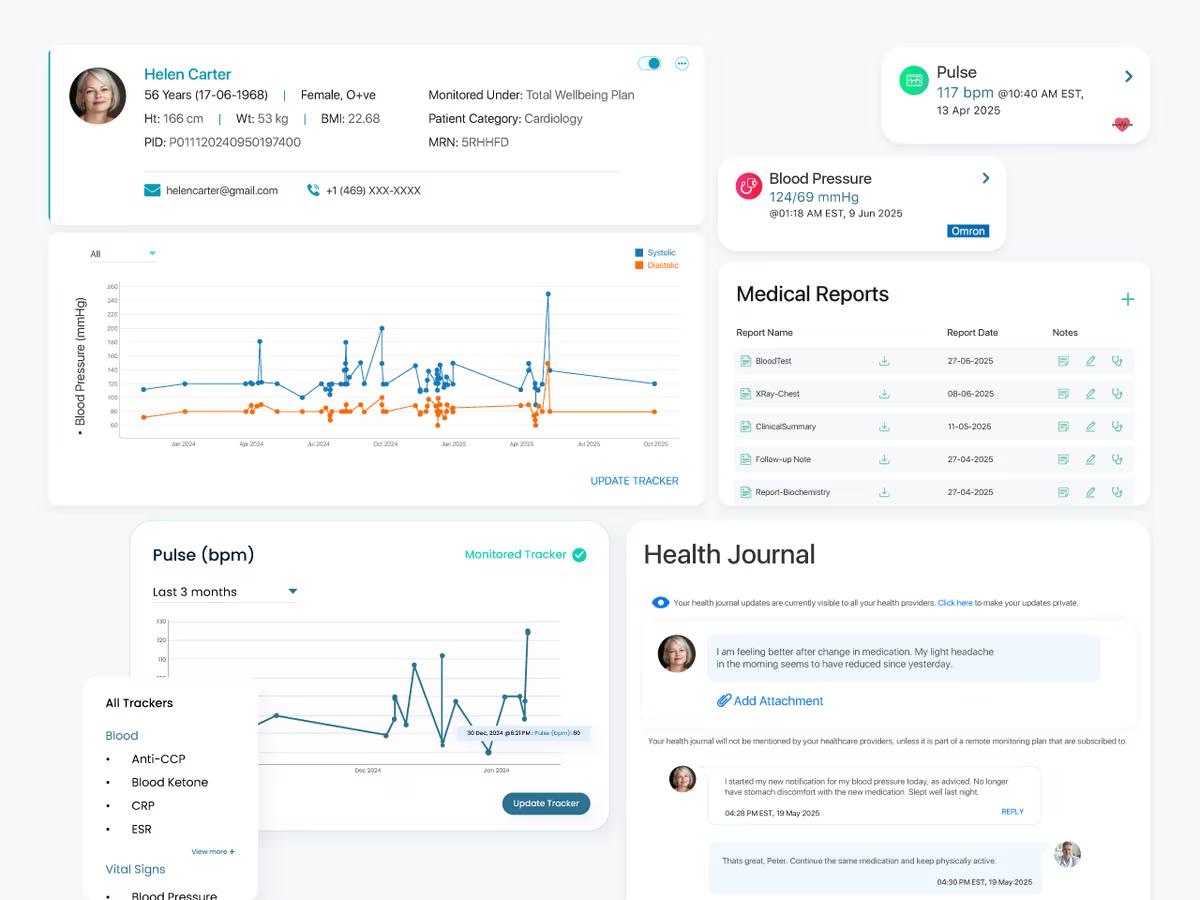
At its simplest, remote patient monitoring means using small devices at home to track health data — blood pressure, blood sugar, heart rate, oxygen levels, weight — and sending that data to a care team automatically. The patient does not need to travel. They do not even need to remember to report anything. The device does the work.
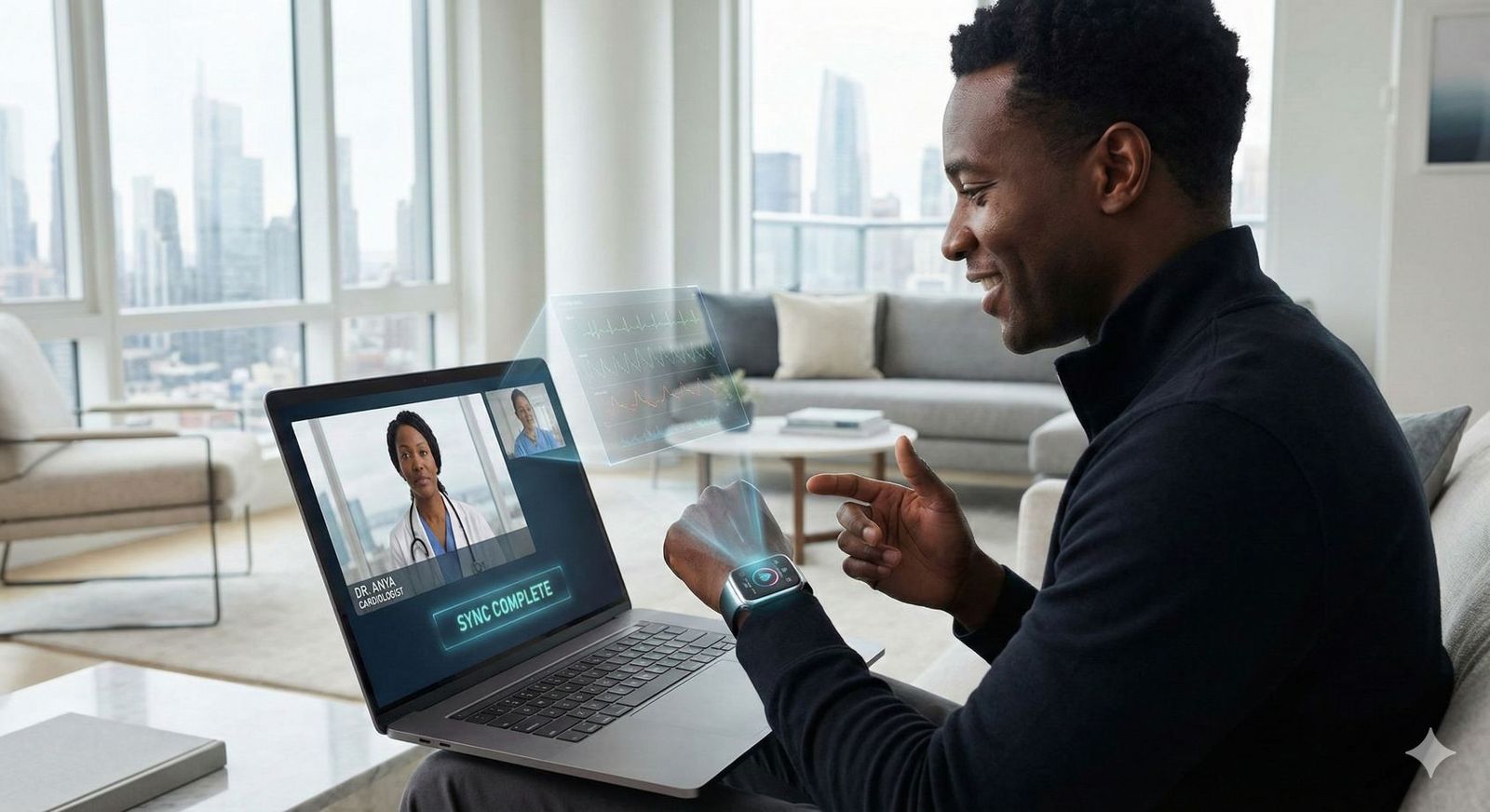
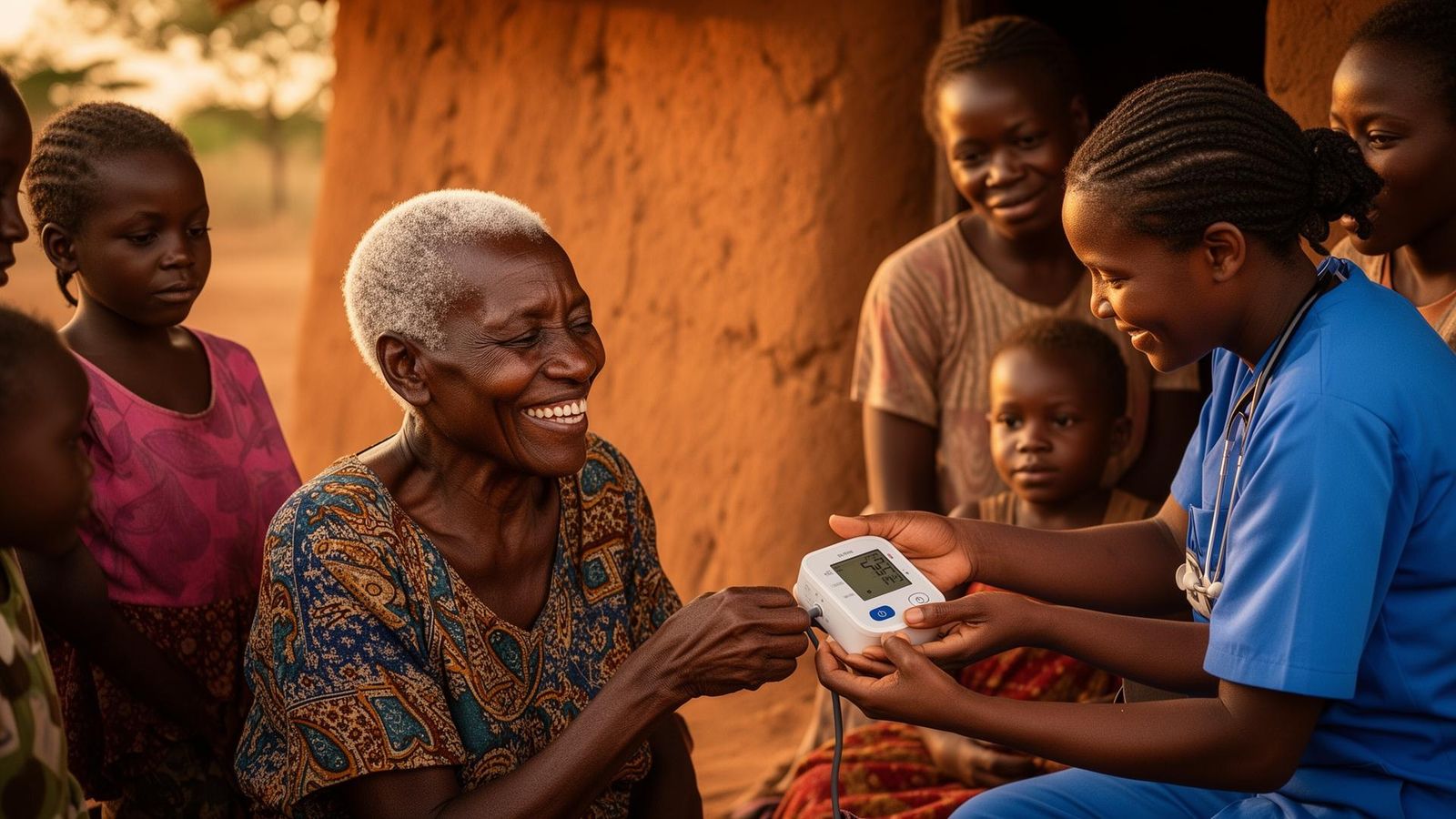
For someone with high blood pressure in a rural Ghanaian community, this might mean a cuff that takes a reading each morning and sends it to a nurse in Accra. For a grandmother with diabetes, it might mean a glucose meter that flags a dangerous trend before she feels any different. For a young professional with a heart condition, it might mean a wearable that alerts a cardiologist the moment something looks off.
“The most powerful medicine is sometimes not a pill. It is the knowledge that someone is watching over you, even when you are asleep.”
From reactive to proactive
The old model of chronic care was reactive. You waited for symptoms. You travelled to a clinic. You saw a doctor for fifteen minutes. Then you went home and hoped for the best until the next appointment — which might be months away.
Remote monitoring replaces that gap with continuity. Instead of a single snapshot, your care team gets a full movie of your health. They see patterns. They spot drift. They catch problems while they are still small — when a tweak in medication or a lifestyle nudge is all that is needed.
Early warning
A slow rise in blood pressure over two weeks triggers a call from a nurse before it becomes a stroke risk.
Fewer emergencies
Patients with heart failure are less likely to end up in emergency rooms when their weight and vitals are watched daily.
Better medication control
Doctors can adjust prescriptions based on real trends, not just the reading from a single anxious clinic visit.
Peace of mind
Patients and families sleep easier knowing a professional eye is on their data around the clock.
The doctor's new window
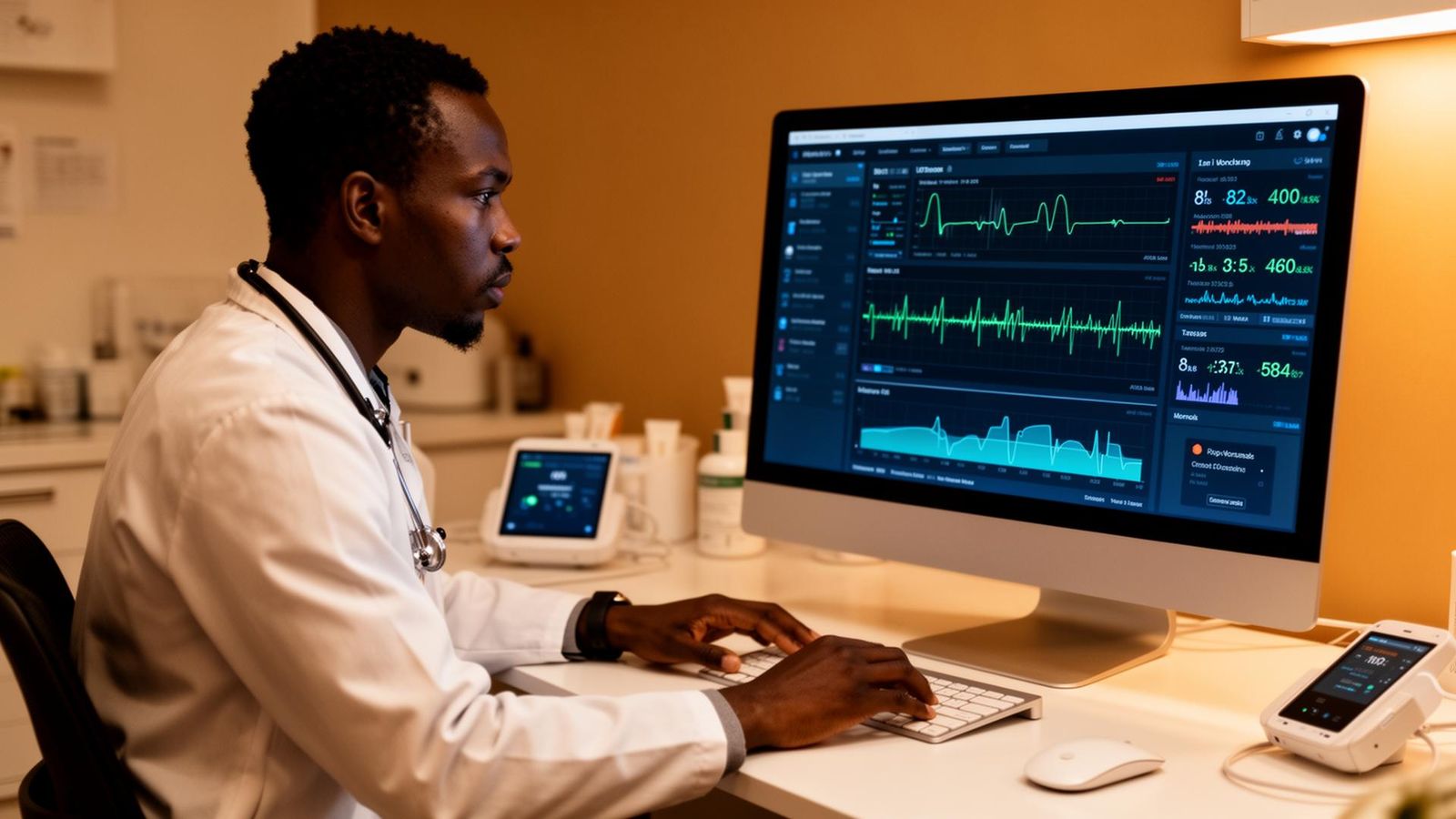
For clinicians, remote monitoring is like gaining a superpower. A single cardiologist can now keep track of hundreds of patients without anyone leaving their village. A diabetes nurse can review overnight glucose curves for fifty patients in the time it used to take to see five in person.
This is not about replacing human connection. It is about making human connection count more. When a doctor calls a patient because their data just turned concerning, that conversation is focused, timely, and often life-saving. When a patient finally meets their specialist face to face, the doctor already knows their story.
Dignity in daily living
Perhaps the most underrated gift of remote monitoring is dignity. Chronic disease can make people feel like their lives have been hijacked by hospitals, queues, and travel. Remote monitoring returns some of that life.
A father can keep working while his blood pressure is watched from afar. A mother can care for her children without spending a whole day on a bus to the city for a check-up. An elderly person can stay in the home they love, surrounded by family, while a nurse reviews their readings each morning.
The technology is ready. The gap is connection.
The devices are getting cheaper. The internet is reaching further. The platforms are getting simpler. What remains is the human bridge — the care team on the other side of the data, trained to respond, to call, to comfort, and to act.
At AllRound Specialists Virtual Clinic, we believe remote monitoring is not a gadget. It is a promise: that no one should face chronic disease alone, and that geography should never decide who gets to live well.
“The quietest revolutions are often the ones that matter most. Remote patient monitoring does not shout. It simply stays. And in that steadiness, it saves lives.”
Looking ahead
As remote monitoring spreads across Ghana and the continent, we are moving toward a healthcare system that does not just react to sickness but actively preserves wellness. A system where chronic disease is not a sentence, but a condition managed with skill, dignity, and compassion.
If the quiet revolution continues, the question is no longer whether we can care for chronic patients remotely. It is how quickly we can make this standard care for everyone — no matter where they live.
Ready to see a specialist?
Book a virtual consultation with an AllRound specialist today.
Book a consultation